Summary
- 9 AI bookkeeping and finance operations tools are compared here for 2026, spanning bookkeeping, AP automation, reconciliation, and financial reporting.
- Pricing ranges from $29/month for self-serve bookkeeping (booke.ai) to quote-based enterprise plans for AP automation and reconciliation platforms, including Stampli, AvidXchange, Tipalti, FloQast, and Numeric.
- AP automation tools like Stampli, AvidXchange, and Tipalti capture and route supplier invoices but require a separate step to post and reconcile the entry in the ERP.
- LayerNext is the only tool in this comparison that combines AP automation, real-time bank reconciliation, and financial reporting on one platform, starting at $299/month, with human approval on flagged exceptions before entries post.
- A 2025 Intuit QuickBooks Accountant Technology Survey found 95% of accounting firms adopted some form of automation technology in the past year, with accounts payable and receivable the second most common use case after payroll.
Comparing AI bookkeeping tools for 2026? AI bookkeeping tools now handle transaction categorization, bank reconciliation, anomaly detection, and real-time reporting automatically. A growing number also extend into AP automation and reconciliation specifically. See side-by-side breakdowns of nine tools, their pricing, and which one fits your business.
What is AI bookkeeping?
AI bookkeeping refers to accounting tools that go beyond manual entry and rule-based automation. They categorize transactions, reconcile accounts, flag anomalies, and generate reports, often in real time. The shift toward AI-driven financial management is accelerating, and businesses are increasingly moving from manual bookkeeping and legacy accounting tools toward platforms that do more of the work automatically.
A 2025 Intuit QuickBooks Accountant Technology Survey found 95% of accounting firms adopted some form of automation technology in the past year. Accounts payable and receivable ranked as the second most common use case, right behind payroll. That's also why AI bookkeeping now overlaps with two categories worth comparing on their own: AP automation software, built specifically to process supplier invoices, and reconciliation or close-management platforms, built to speed up month-end matching.
What modern businesses want from AI Bookkeeping Software
From search trends and user reviews, the key features businesses are looking for include:
- Cloud-based access: the ability to work from anywhere, sync bank feeds, collaborate remotely.
- Automation+accuracy: more than notifications; real automation that reduces manual corrections.
- Real-time visibility: dashboards, cash flow, runway, expense breakdowns.
- Scalability: ability to handle growing transaction volume, multi-user access, integrations.
- Transparent pricing: clear, predictable cost rather than hidden fees.
- Human backup support: AI works, but human oversight or review options are still valued.
- Security & compliance: SOC2, encryption, audit-ready data.
When evaluating tools, we’ll use those criteria to compare performance.
Tool comparison summary
1. LayerNext
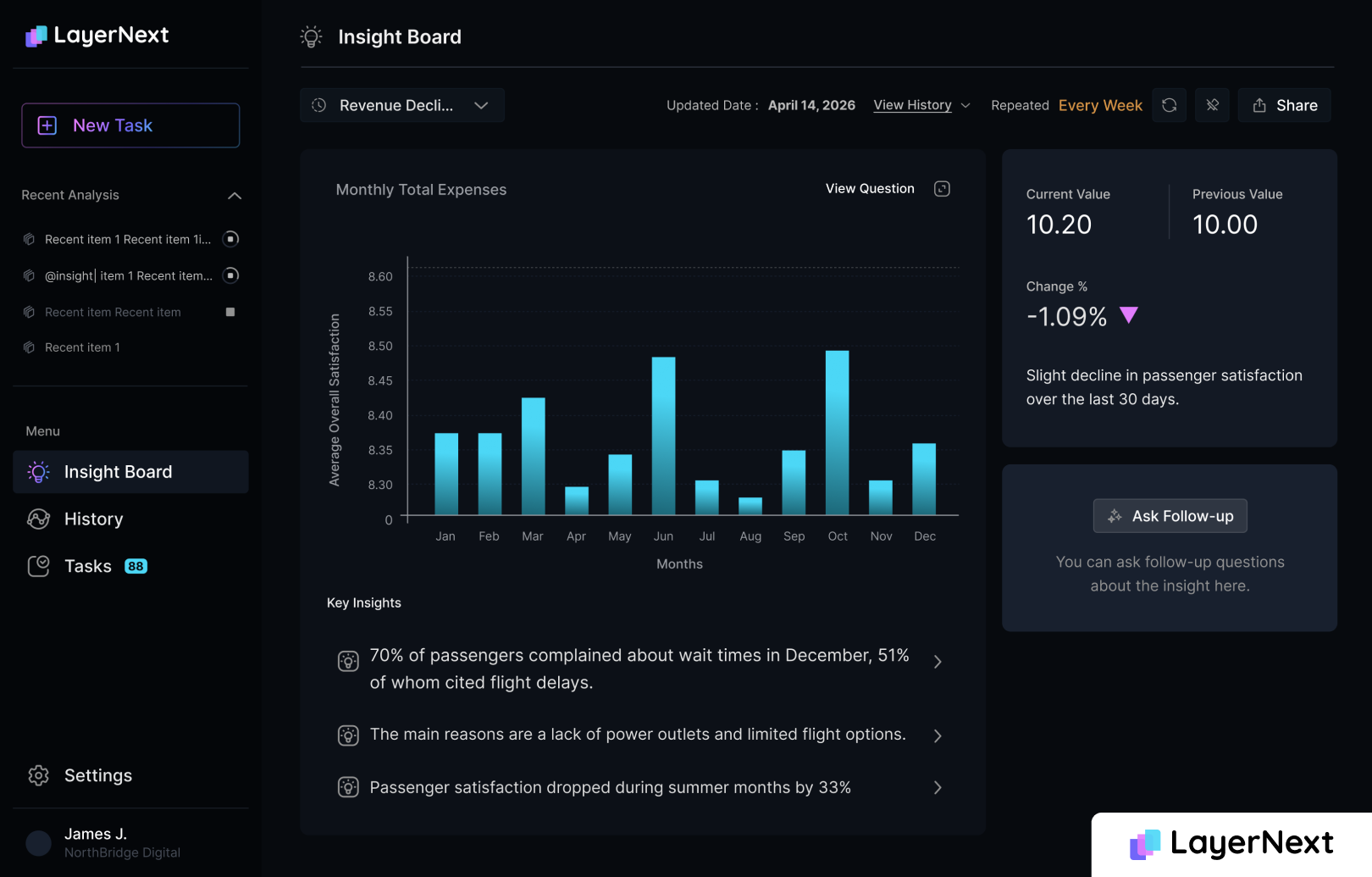
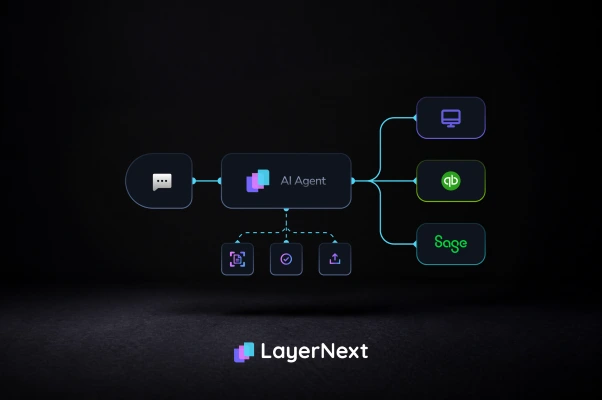
LayerNext is not just another AI bookkeeping tool. It's built as an AI-powered financial operations platform, with specialized agents handling continuous categorization and reconciliation across AP, banking, and reporting. The agent flags exceptions for review; validated entries post automatically, with a full audit trail.
Features:
- Invoice ingestion and PO matching
- Real-time bank reconciliation, not month-end batches
- CFO-level reporting: cash flow, burn, runway, margin
- Anomaly detection across entities
Pricing: $299/month for self-serve. Enterprise plans are volume-based and quoted per account.
Complexity: Easy to start; enterprise deployment is phased over several weeks.
Trial: Free demo available.
2. Zeni
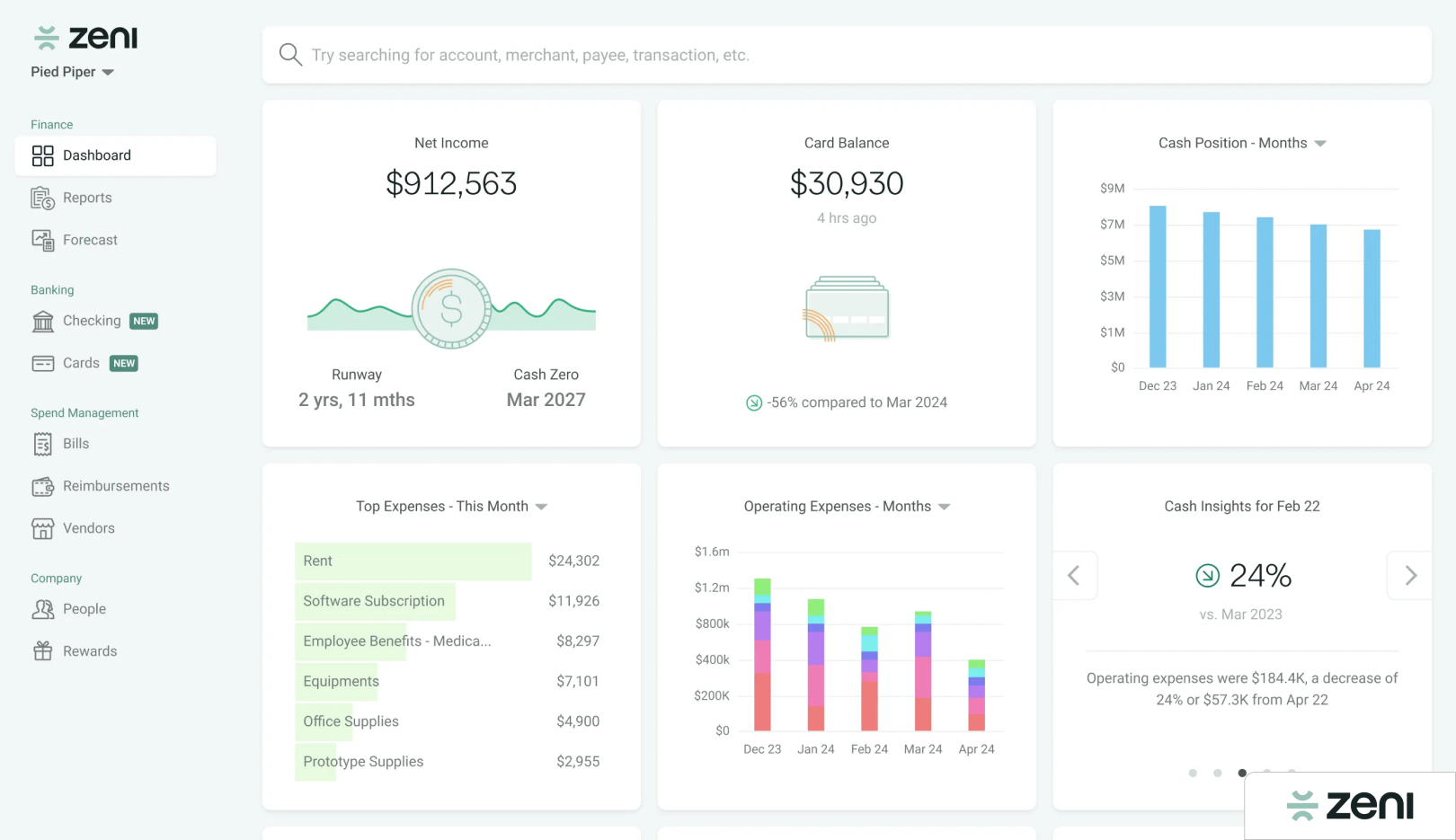
Zeni pairs AI bookkeeping with a dedicated human finance team. That's a genuinely different model from pure software: daily updates, real-time dashboards, and a person accountable for the books.
Features:
- Daily bookkeeping updates
- Dedicated finance team
- Real-time dashboards
- Spend management
- FP&A support
Pricing: $549/month (Starter tier, annual contract). $799/month (Growth tier, annual contract). Enterprise is custom.
Complexity: Medium — onboarding involves a team, not just a signup.
Trial: Demo required; no free plan.
3. booke.ai
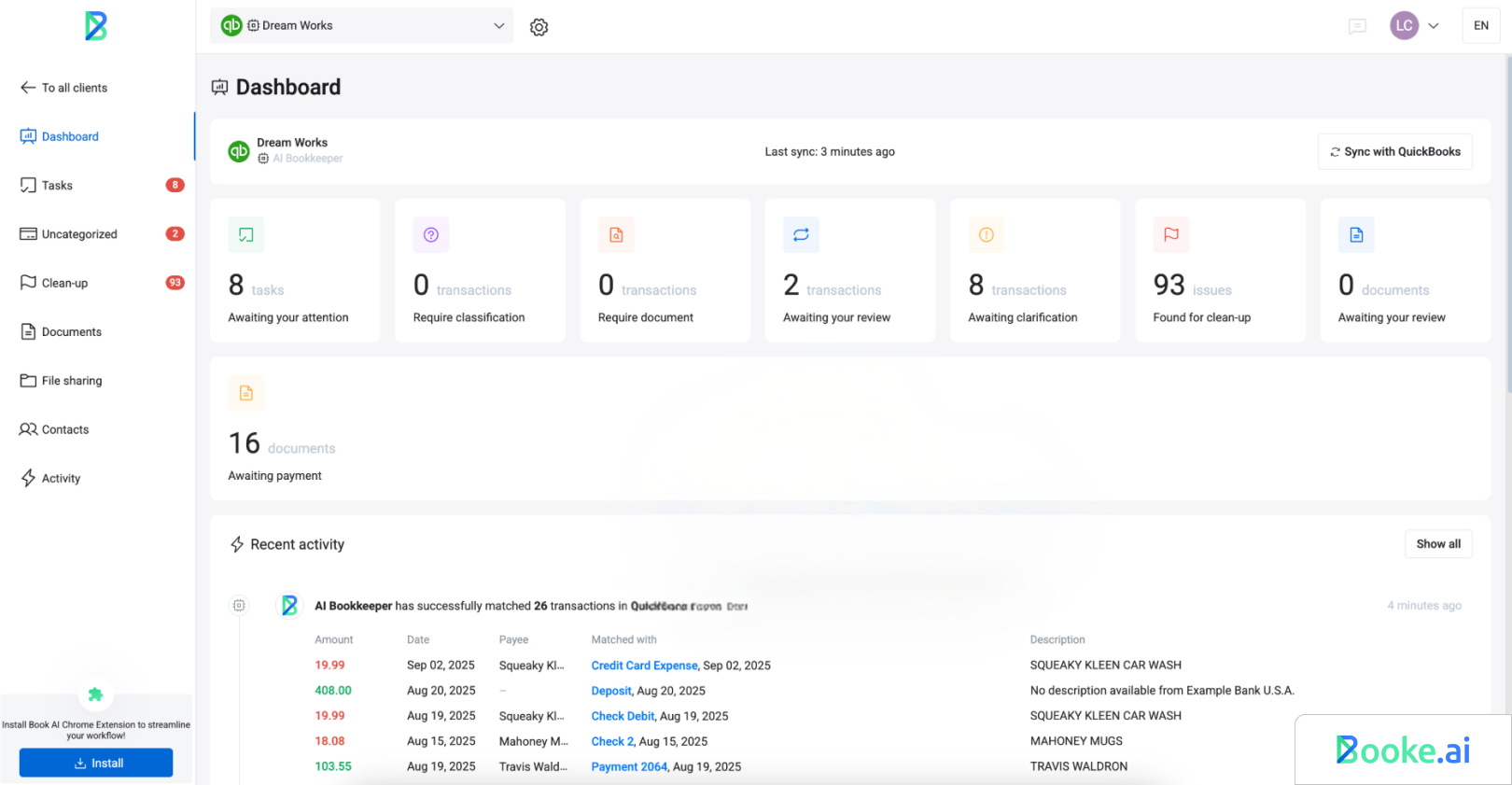
booke.ai, formerly Bookeeping.ai, is built for freelancers and micro-businesses that need the basics without the overhead.
Features:
- Automated financial statements
- OCR receipt and invoice capture
- Transaction categorization
- Real-time dashboards
- AI chat interface
Pricing: $29/month.
Complexity: Easy.
Trial: Free trial available.
4. QuickBooks (with AI features)
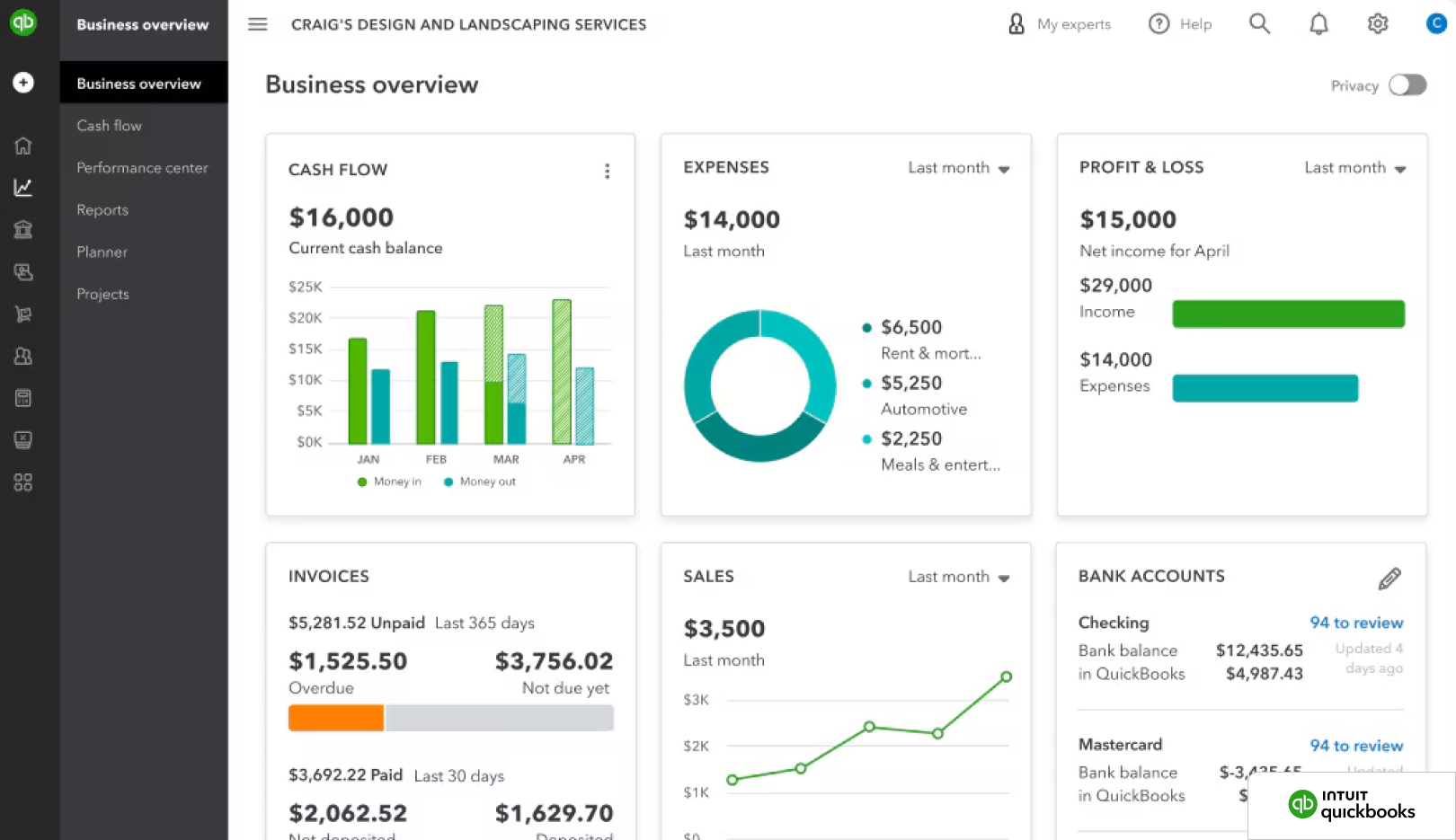
QuickBooks fits businesses that want AI layered onto accounting software they already know, not a from-scratch automation platform.
Features:
- AI transaction categorization
- Reconciliation support
- Anomaly detection
- Invoice reminders and forecasting
- Broad third-party integrations
Pricing: $30/month, AI features vary by tier.
Complexity: Medium.
Trial: 30-day free trial.
5. Stampli
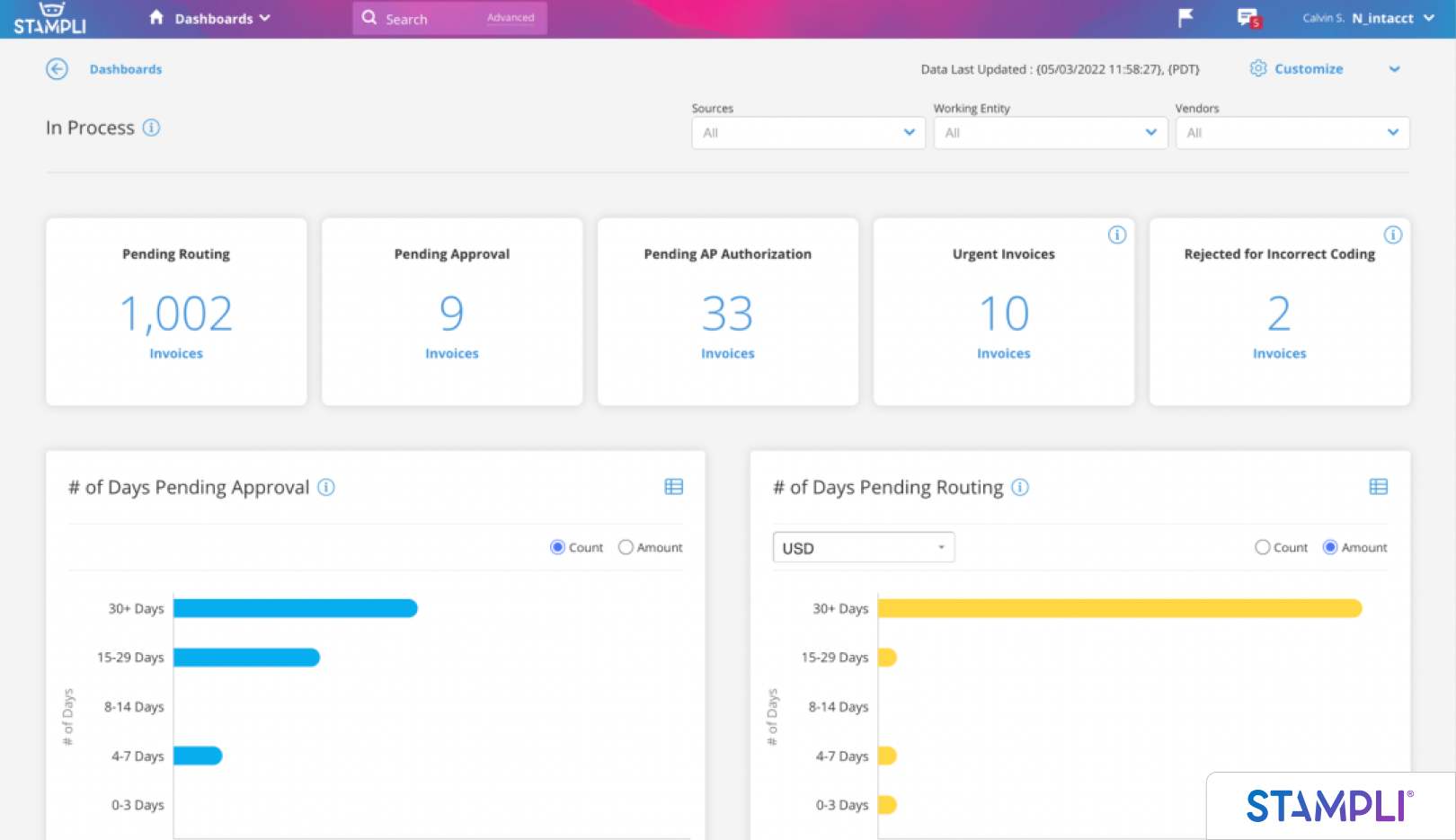
Stampli is one of the more established names in AP-specific automation, built for invoice-heavy industries like healthcare, hospitality, construction, retail, and manufacturing. It's a stronger fit for AP than the bookkeeping-first tools above, but it captures and routes invoice data rather than finishing the job. Someone still keys the entry into the ERP and reconciles it later.
Features:
- OCR invoice capture
- Two- and three-way PO matching
- AI-assisted approval decisions
- Configurable approval workflows
- Multi-entity support
Pricing: Not publicly listed; quote-based.
Complexity: Medium; built around existing ERP workflows.
Trial: Demo-based.
6. AvidXchange
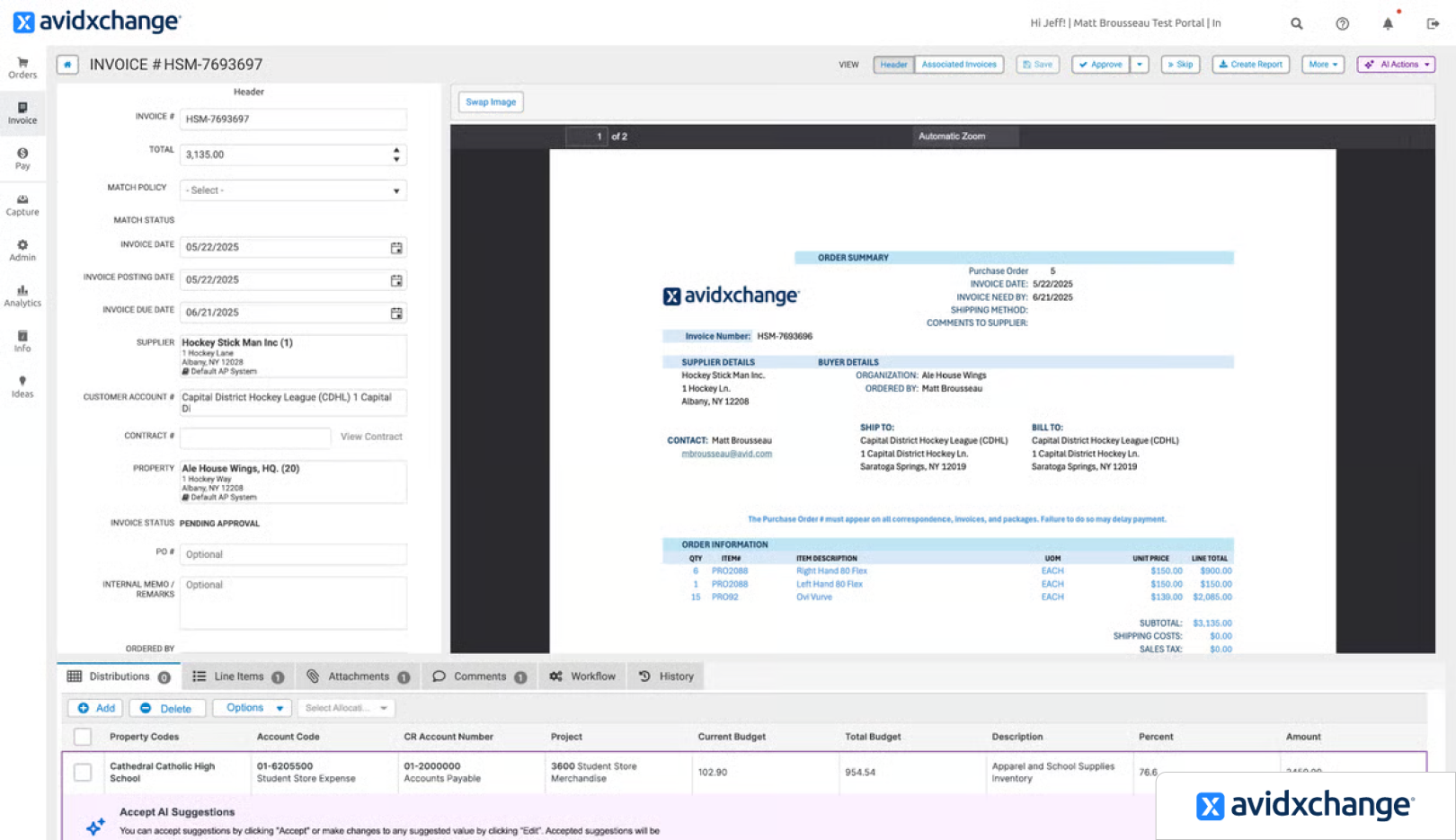
AvidXchange is built for mid-market businesses on industry-specific or regional ERPs, particularly real estate, construction, and healthcare. Like Stampli, it captures and routes invoices; it doesn't post or reconcile them without a separate step.
Features:
- Invoice capture and OCR
- PO matching against approval workflows
- Payments via the AvidPay Network (ACH, virtual card, check)
- 200+ integrations, including Yardi and MRI
Pricing: Not publicly listed; quote-based.
Complexity: Medium; demo required to scope integrations.
Trial: Demo-based; no published free trial.
7. Tipalti
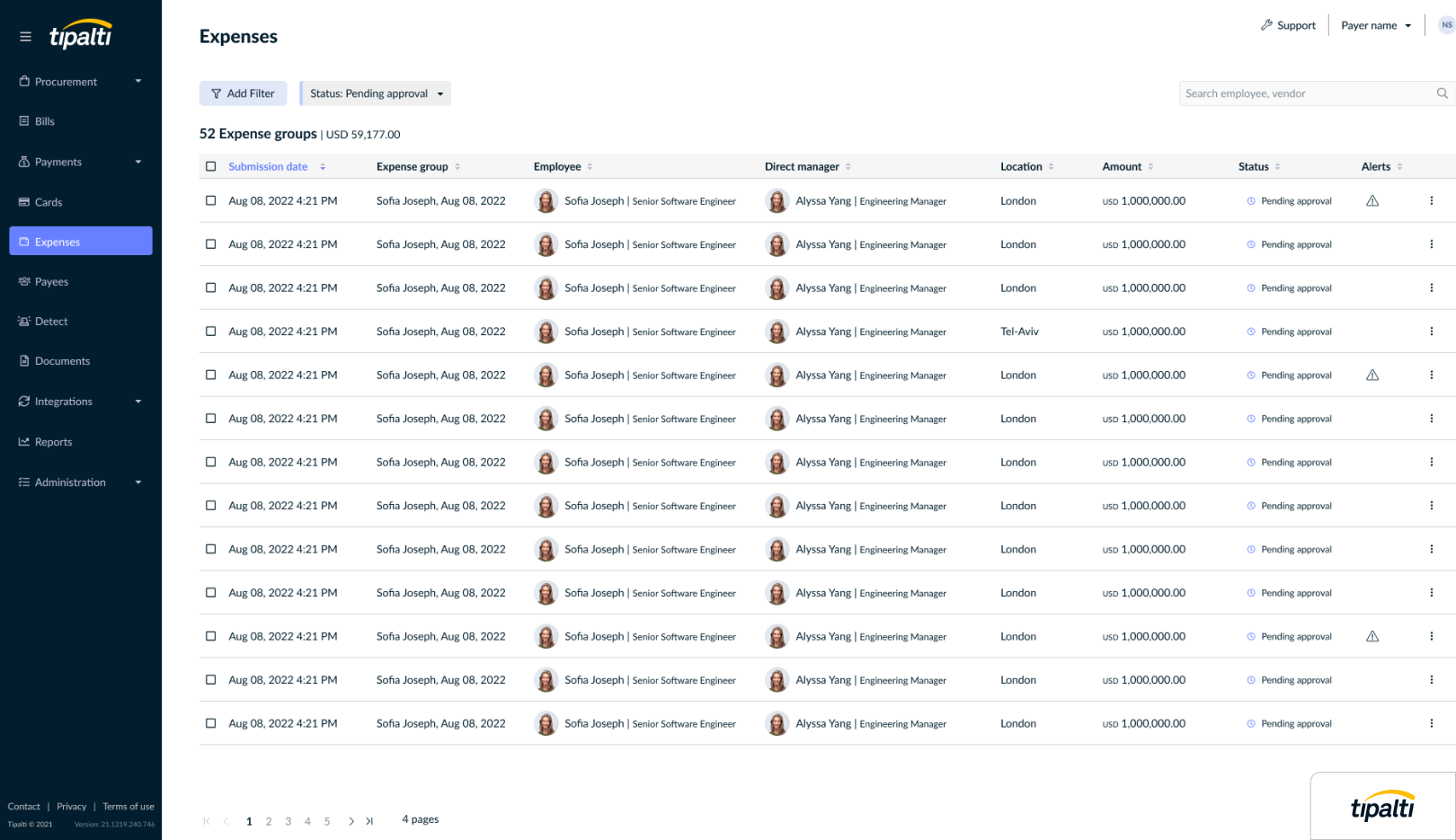
Tipalti is built for businesses paying suppliers across multiple countries and currencies, spanning 200+ countries and 120 currencies. It's a stronger fit for global AP than domestic-only tools, but like Stampli and AvidXchange, it captures and routes invoices rather than posting and reconciling them.
Features:
- AI-assisted invoice capture and coding
- Global payments: 200+ countries, 120 currencies
- PO matching and supplier tax compliance
- Multi-entity support across subsidiaries
Pricing: Not publicly listed; quote-based.
Complexity: Medium to high; global payment setup adds steps.
Trial: Demo-based; no published free trial.
8. FloQast
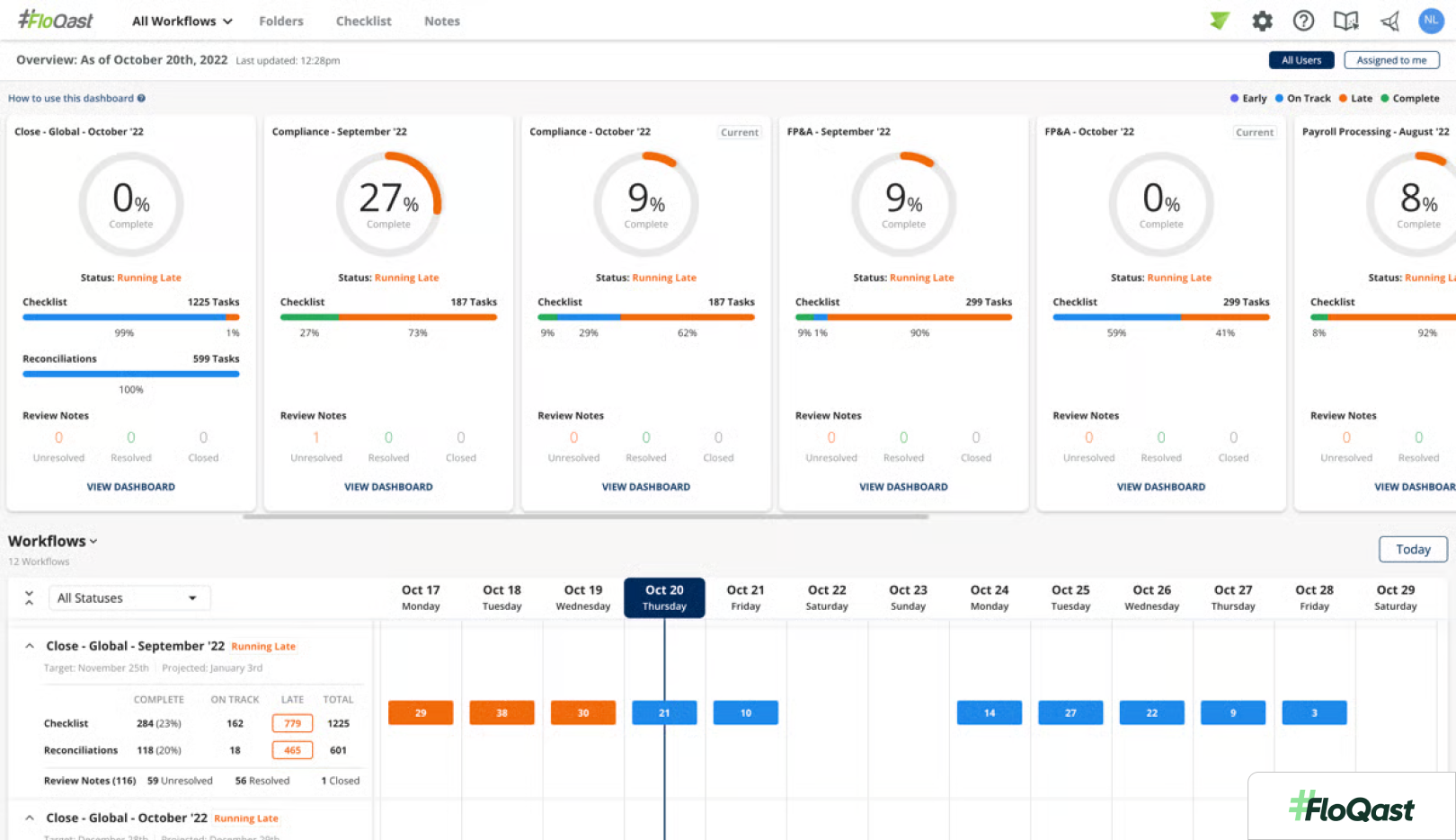
FloQast is built for accounting teams that already have clean data and want structure around the close itself, not a tool that processes AP or reconciles from scratch.
Features:
- Close task management and sign-offs
- AI-assisted transaction matching (AutoRec)
- Multi-entity consolidation
- SOX-compliant audit documentation
Pricing: Quote-based. Median reported contract around $24,000/year (annual contract), small deployments $30,000–$50,000/year, mid-market $60,000–$120,000/year.
Complexity: Medium to high; built around an existing close process.
Trial: Demo-based.
9. Numeric
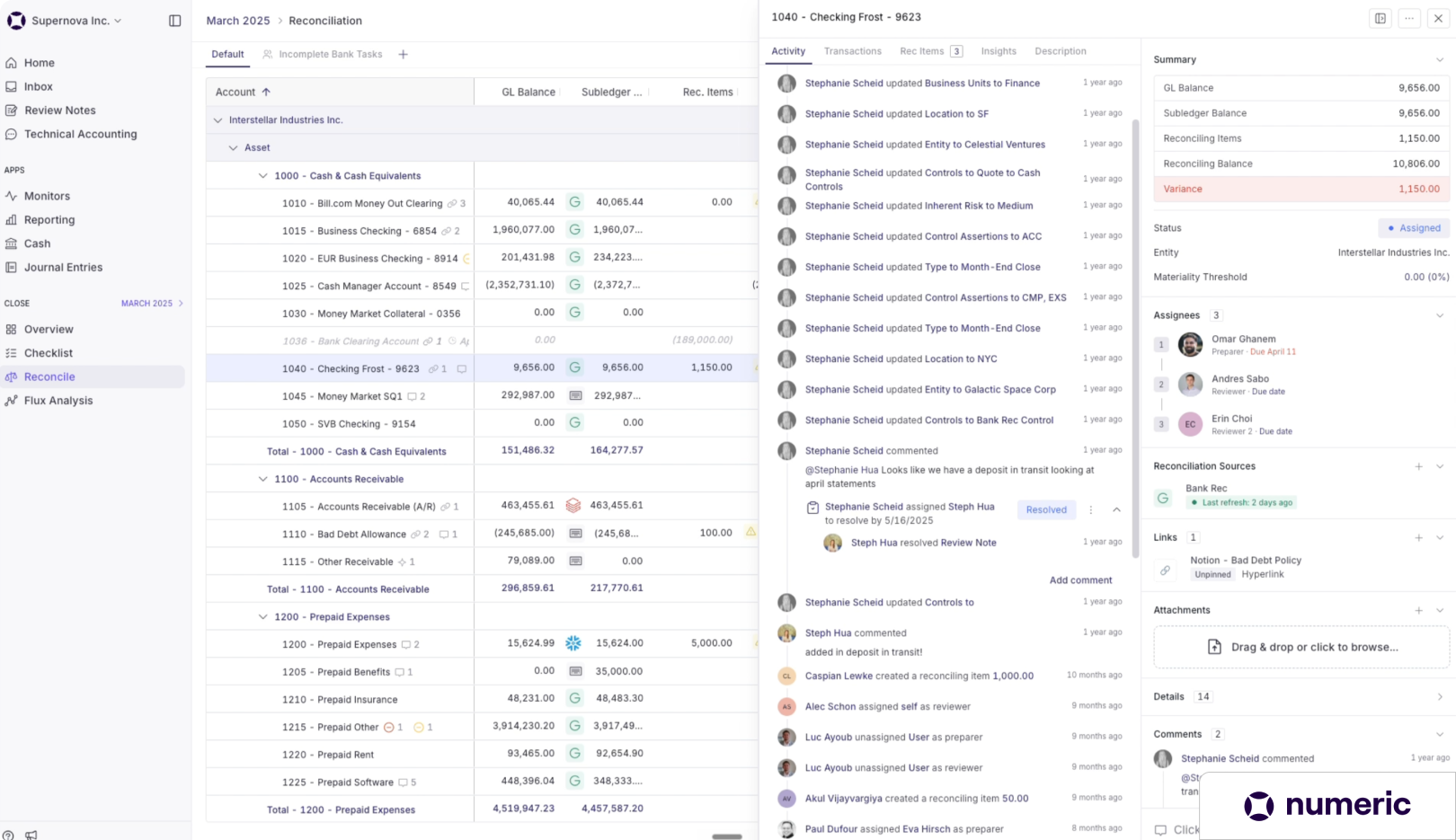
Numeric covers similar ground to FloQast: AI-assisted flux commentary and trial-balance reconciliation, aimed at teams that want help inside an existing close, not a tool that processes AP or bookkeeping from the start.
Features:
- AI-assisted flux commentary
- Trial-balance reconciliation
- Close optimization analytics
Pricing: Not publicly listed.
Complexity: Medium; layers onto an existing close workflow.
Trial: Demo-based.
Why LayerNext stands out
Among the platforms evaluated, LayerNext delivers the strongest combination of automation depth, real-time intelligence, and category coverage.
- Finishes the job
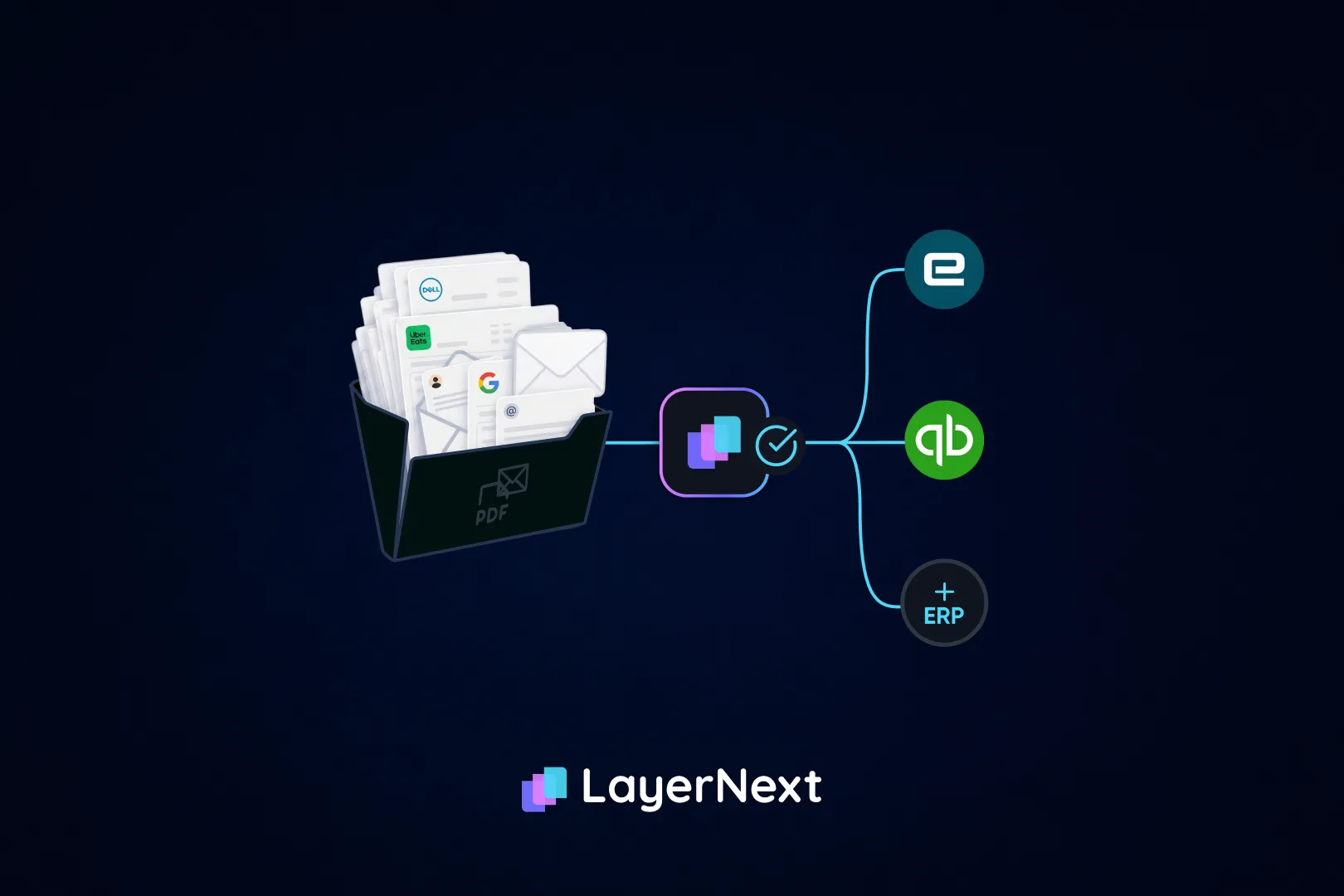
Most AP tools, including Stampli, AvidXchange, and Tipalti, capture and route invoice data. Most reconciliation tools, including FloQast and Numeric, organize an existing close. LayerNext carries the same transaction from ingestion through posting and reconciliation, across QuickBooks, Dynamics 365, Sage, Xero, NetSuite, SAP, and legacy or custom ERPs, including systems with no API.
- Real-time financial intelligence
Cash flow, burn, runway, and margin performance, current to today rather than to the last close.
- Predictable pricing
$299/month starting, no hidden setup costs. Enterprise pricing is volume-based and quoted upfront, unlike the quote-only pricing common among AP and reconciliation specialists.
- Built for teams that want to stop keying data by hand
A founder running their own books, or a controller managing AP across entities in manufacturing, distribution, or a multi-location service business processing invoices at volume.
- Works with what you already have
No rip-and-replace. Connects to cloud, desktop, and legacy platforms, including ones without an API.
Key takeaways
booke.ai suits a freelancer who needs the basics cheaply. Zeni suits a funded startup that wants AI plus a human team. QuickBooks suits a business already standardized on it. Stampli suits a business that wants strong AP-specific collaboration on an existing ERP. AvidXchange suits a mid-market business on an industry-specific ERP like Yardi or MRI. Tipalti suits a business paying suppliers across multiple countries. FloQast and Numeric suit accounting teams that already have clean data and want close structure. LayerNext suits a business, from self-serve to mid-market, that wants bookkeeping, AP automation, reconciliation, and reporting on one platform instead of three or four.
FAQ