Summary
- CFO-grade financial intelligence means real-time visibility into cash flow, burn rate, runway, margin, and anomalies across every entity, not a report that's three weeks stale by the time it reaches a CFO's desk.
- LayerNext delivers it by keeping the underlying AP, bank reconciliation, and ERP data continuously current, so reporting reflects today's numbers instead of last month's close.
- Finance teams using LayerNext save 90 to 165 hours per month and see 90 to 100% fewer processing errors, with 95%+ task accuracy on defined workflows.
- The need for this usually shows up as a specific event: a board or lender demanding reporting the team can't deliver on time, new PE ownership, a multi-entity structure that makes consolidation painful, or a BI project that stalled because the data feeding it was never clean.
- Deployment runs weeks, not months: discovery in weeks 1 to 2, pilot in weeks 3 to 6, full deployment by weeks 7 to 12.
The traditional role of the Chief Financial Officer has evolved dramatically in recent years. Where businesses once relied solely on human expertise and manual processes, today's technology-driven landscape demands faster insights, real-time accuracy, and strategic foresight. This is where the AI CFO emerges as a transformative solution for businesses seeking financial clarity without the overhead of traditional finance teams.
What Is an AI CFO?
An AI CFO, or Artificial Intelligence Chief Financial Officer, is an advanced software platform that combines machine learning, automation, and financial expertise to deliver CFO-level insights and services to businesses. Unlike traditional CFO services that depend entirely on human consultants, this approach leverages sophisticated algorithms to automate financial data processing, analyze financial patterns, predict cash flow trends, and provide strategic recommendations in real time.
Think of an AI CFO as having a seasoned financial expert working around the clock, continuously monitoring your finances, catching errors instantly, and delivering actionable insights the moment you need them. The technology doesn't replace human judgment entirely but rather augments financial decision-making with unprecedented speed, accuracy, and consistency.
Core Functions of an AI CFO
Modern AI CFO platforms perform several critical functions that traditionally required extensive manual work:
Transaction Management: Automatically categorizing and recording every financial transaction across multiple accounts and payment systems, eliminating the hours typically spent on data entry and classification.
Real-Time Reconciliation: Continuously matching transactions against bank statements and identifying discrepancies immediately, rather than discovering errors weeks or months later during monthly close processes.
Financial Analysis: Calculating key metrics like burn rate, runway, profit margins, and cash flow trends automatically, providing instant visibility into financial health without building complex spreadsheets.
Forecasting and Predictions: Using historical patterns and current trends to project future cash positions, identify potential shortfalls, and recommend timing for major expenses or fundraising activities.
Understanding CFO Services in Business Context
Before exploring AI CFO solutions, it's essential to understand what CFO services traditionally encompass. A CFO (Chief Financial Officer) stands as one of the most critical executive positions in any organization, responsible for the complete financial health and strategic financial direction of the company.
What Does a CFO Do?
The CFO role extends far beyond basic accounting. While accountants focus primarily on recording historical transactions and ensuring compliance, a CFO provides forward-looking strategic guidance. They analyze trends, model scenarios, advise on capital allocation, manage investor relationships, and ultimately help leadership make informed decisions about the company's financial future.
In larger organizations, the CFO manages entire finance teams, oversees fundraising efforts, negotiates with banks and investors, and serves as a trusted advisor to the CEO on all matters involving money, risk, and growth strategy.

The Virtual CFO Evolution
As businesses sought more flexible financial leadership, the virtual CFO model emerged. Virtual CFO services provide part-time or fractional access to experienced financial executives who work remotely with multiple clients. This arrangement allows small and medium-sized businesses to access high-level financial expertise without the six-figure salary commitment of a full-time executive.
Virtual CFO services typically include cash flow management, financial planning and analysis, fundraising support, budget development, and strategic advisory. However, traditional virtual CFO services still face limitations. They depend on periodic reviews rather than continuous monitoring, require manual data preparation, and often involve delays between requesting information and receiving insights.
The AI CFO Advantage: Why Technology Changes Everything
The emergence of AI CFO platforms represents a fundamental shift in how businesses manage and understand their finances. While virtual CFO services provide valuable strategic guidance, they still rely heavily on manual processes, periodic check-ins, and human availability.
Speed and Real-Time Insights
Traditional financial processes operate on monthly or quarterly cycles. You close your books at month-end, your accountant reviews transactions over several days, your virtual CFO receives the information and analyzes it, and finally you get insights about what happened weeks ago.
AI CFO platforms eliminate these delays entirely. Every transaction is categorized and reconciled the moment it occurs. Financial metrics update continuously. You can check your current runway, burn rate, or cash position at any moment and trust that you're seeing accurate, up-to-date information.
Accuracy and Consistency
Manual data entry and reconciliation, no matter how skilled the team, face challenges maintaining perfect consistency across thousands of transactions. Categories might be applied differently over time, reconciliation errors might go unnoticed until audit, and the quality of financial data often depends on whoever processed the most recent batch of transactions.
AI systems apply the same logic consistently to every transaction, every time. They learn from corrections, improve their categorization over time, and never experience the fatigue or distraction that affects human workers.
Cost Efficiency
Hiring a full-time CFO typically costs between $150,000 and $400,000 annually, according to Glassdoor's CFO salary data and industry compensation surveys. Virtual CFO services typically range from $3,000 to $10,000 monthly, based on scope and industry, as reported by the American Institute of CPAs. Traditional manual data-entry services add another $500 to $3,000 monthly depending on transaction volume.
AI CFO platforms deliver comprehensive financial management at a fraction of these costs, typically ranging from a few hundred to a few thousand dollars monthly regardless of transaction volume.
LayerNext: The Superior AI CFO Solution
While several AI-powered financial tools have emerged in recent years, LayerNext stands apart as the most comprehensive and reliable AI CFO platform available today. The platform was built specifically to address the gaps that plague both traditional manual finance services and competing AI solutions.
What Makes LayerNext Different
LayerNext combines three critical elements that competitors often sacrifice: automation depth, human-level accuracy, and actionable strategic insights. Many platforms excel at one or two of these areas while falling short on the others. LayerNext delivers all three without compromise.
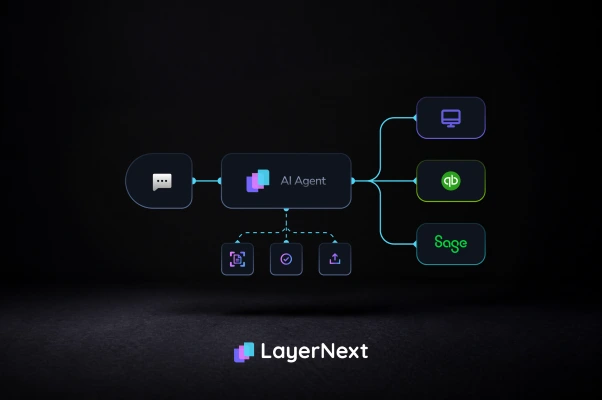
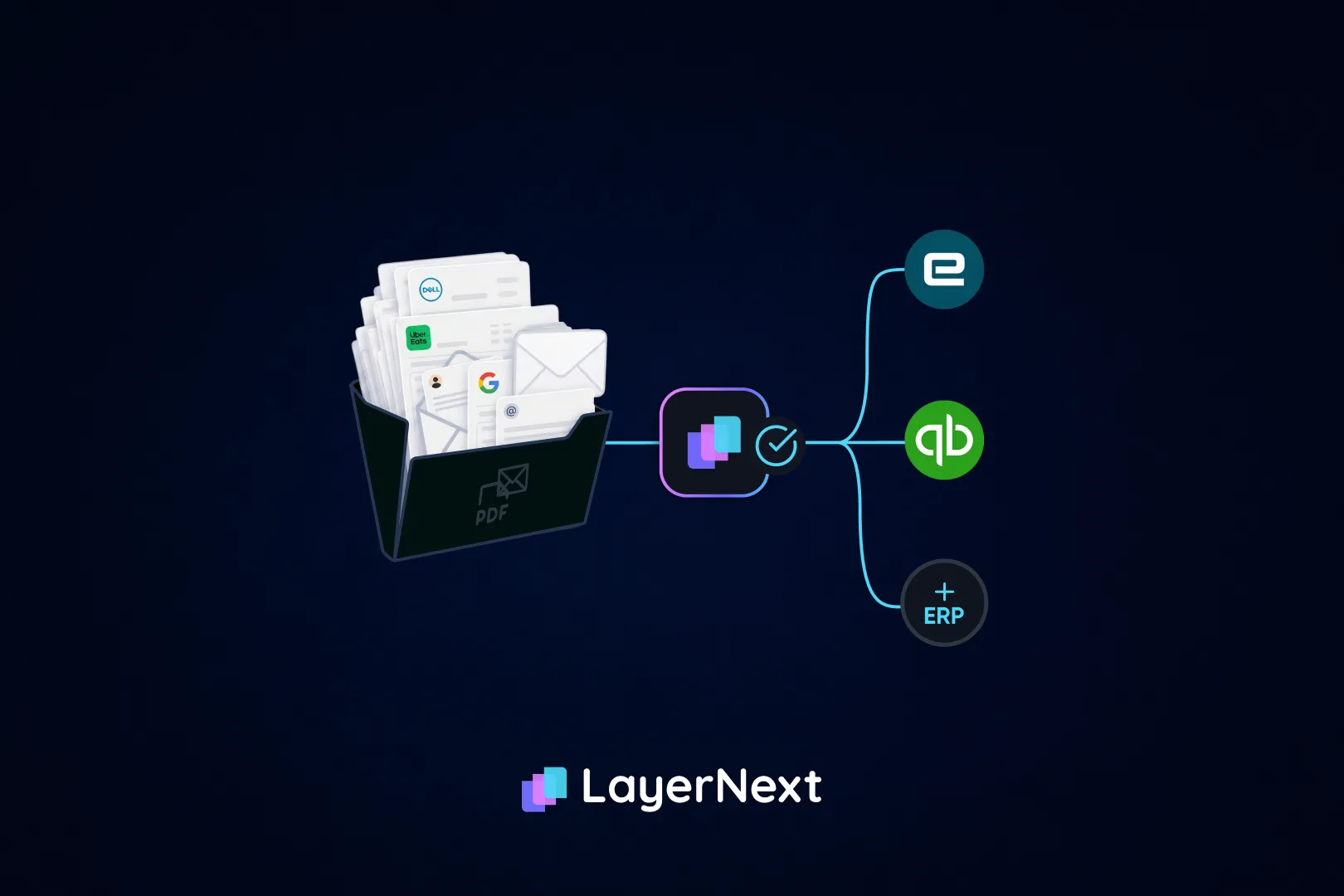
Complete Automation: LayerNext doesn't just assist with financial data entry. It handles the entire process automatically. The platform integrates directly with QuickBooks and your business bank accounts, automatically categorizing every transaction, reconciling accounts continuously, and maintaining clean, audit-ready books without any manual intervention required.
Human-Level Precision: While other AI accounting tools produce results that require extensive human review and correction, LayerNext achieves accuracy levels matching experienced finance staff. The platform uses advanced machine learning models trained on millions of transactions, combined with sophisticated error detection systems that catch and correct mistakes before they affect your financial statements.
CFO-Grade Strategic Insights: Beyond accurate transaction processing, LayerNext delivers the forward-looking analysis and strategic metrics that businesses need for decision-making. The platform automatically calculates and tracks burn rate, runway, cash flow trends, margin analysis, and other critical indicators that traditionally required financial expertise to compute and interpret.
Core Capabilities
Automated Transaction Processing: Every transaction flowing through your business accounts gets automatically categorized and recorded in QuickBooks. The system recognizes vendors, understands transaction patterns, and applies the correct account codes without requiring rules engines or manual mapping.
Real-Time Reconciliation: Rather than reconciling monthly or quarterly, LayerNext reconciles continuously. The moment a transaction appears in your bank feed, the system matches it against recorded transactions, identifies discrepancies, and flags items requiring attention.
Cash Flow Intelligence: Understanding where money comes from, where it goes, and when cash crunches might occur is fundamental to business survival. LayerNext tracks every dollar flowing through your business, categorizes spending by type, identifies trends, and projects future cash positions based on historical patterns.
Burn Rate and Runway Analysis: For startups and growth-stage companies, knowing how long your cash will last at current spending rates is existential information. LayerNext calculates burn rate automatically, accounts for seasonal variations and one-time expenses, and provides realistic runway estimates that update daily.
Instant Financial Reports: Whether you need a profit and loss statement for an investor meeting, a cash flow report for your banking relationship, or a detailed spending analysis for internal planning, LayerNext generates accurate reports instantly.
Continuous Error Detection: Even the best automation occasionally encounters unusual transactions or ambiguous situations. LayerNext's error detection system identifies these edge cases immediately and flags them for review, preventing small mistakes from compounding into significant problems.
Comparing AI CFO Solutions: Why LayerNext Leads
The market for AI-powered financial tools has grown crowded, with various platforms offering different combinations of automation, insights, and services. Understanding how these solutions compare helps clarify why LayerNext represents the superior choice.
LayerNext vs. Traditional Virtual CFO Services
Traditional virtual CFO services provide valuable strategic guidance and financial expertise. However, they operate on periodic review cycles and typically require a separate data-entry service. LayerNext delivers comparable strategic insights automatically while also handling all foundational transaction-processing work.
LayerNext vs. Basic Accounting Software
Traditional accounting software like QuickBooks provides the framework for recording financial transactions but requires significant manual work to maintain accuracy. Users must categorize transactions, perform reconciliations, generate reports, and calculate metrics themselves.
LayerNext transforms QuickBooks from a passive recording system into an intelligent financial management platform. While QuickBooks provides the structure and storage, LayerNext provides the intelligence and automatically handles all the manual work while delivering insights that basic accounting software cannot generate.
LayerNext vs. Competitor AI Platforms
Several competitors offer AI-powered transaction-processing or financial analysis tools. However, most focus on specific aspects of financial management rather than providing comprehensive solutions.
Automation Depth: Many AI accounting tools require significant manual intervention. They might suggest transaction categories that users must approve or identify potential matches during reconciliation that require confirmation. LayerNext minimizes manual touchpoints by achieving higher accuracy rates.
Strategic Capability: Platforms that excel at automation often fail to deliver meaningful strategic insights. They might keep your books accurate but provide no visibility into burn rate, runway, or cash flow trends. LayerNext solves both simultaneously.
Integration Quality: Some competitors operate as standalone platforms requiring duplicate data entry or complex integration processes. LayerNext's deep QuickBooks integration means you maintain a single source of truth in the accounting system you already use.
Implementation and Getting Started
One of LayerNext's significant advantages is the simplicity of implementation. Unlike traditional software deployments requiring extensive configuration, training, and workflow redesign, LayerNext works with your existing systems and processes.
The Onboarding Process
Getting started with LayerNext requires three simple steps:
Connection: Authorize LayerNext to access your QuickBooks account and connect your business bank accounts. The entire process takes minutes and uses secure, read-only connections that keep your data safe.
Initialization: LayerNext analyzes your existing financial data, learning your business patterns, vendor relationships, and transaction types. This initialization process happens automatically in the background, typically completing within hours.
Operation: Once initialized, LayerNext begins processing transactions automatically. You can immediately access dashboards, review financial metrics, and generate reports without any training period or learning curve.
Ongoing Operation
Once LayerNext is fully operational, your role shifts from doing financial work to consuming financial intelligence. Instead of spending hours maintaining books, you spend minutes reviewing dashboards and making decisions based on accurate, current information.
The platform continues running automatically, processing transactions daily, updating metrics continuously, and alerting you to issues requiring attention. Quarterly and annual close processes become dramatically simpler, as your books are always current and accurate.
Take Control of Your Finances Today
Your business deserves better than delayed financial information, manual data-entry drudgery, and expensive traditional services that don't scale with your growth.
LayerNext delivers the financial clarity, control, and confidence you need to focus on running your business rather than maintaining your books. With automated transaction processing, real-time reconciliation, instant insights, and continuous error detection, you gain the financial intelligence of a seasoned CFO at a fraction of traditional costs.
Stop spending hours on manual data entry. Stop waiting weeks for financial reports. Stop wondering whether your financial data is accurate. Start making decisions based on real-time financial intelligence that you can trust.
Frequently Asked Questions