Tell us about yourself and we will get back to you as soon as we can.
_28_1_25.webp)
Scaling a business is supposed to make things easier. Revenue increases, teams grow, and operations mature. Yet for many founders, growth is exactly when financial stress intensifies.
Cash flow problems don’t usually arrive with a warning. They develop quietly, hidden behind rising revenue, optimistic forecasts, and outdated financial processes. By the time the issue becomes obvious, the business is already reacting instead of planning.
Scaling doesn’t kill companies. Losing control of cash flow does.
Below are seven cash flow mistakes that consistently break scaling companies and how modern, real-time financial systems like LayerNext are designed to prevent them.
One of the earliest and most damaging mistakes founders make is assuming that profit equals cash in the bank.
Profit is an accounting measure. Cash flow is about timing. A business can be profitable on paper while struggling to pay salaries, vendors, or taxes. As companies scale, timing gaps widen, customers take longer to pay, invoices get larger, and expenses hit immediately.
This disconnect is why profitable businesses still experience cash crunches.
Founder Pain
“We’re profitable on paper, but cash feels tight.”
Traditional accounting systems operate on a monthly cycle. But scaling businesses don’t.
Hiring, marketing spend, contract approvals, and operational decisions happen daily. When financial visibility updates only at month-end, founders are making high-impact decisions with outdated information.
This lag creates blind spots, especially when growth accelerates and cash moves faster than reports can keep up.
Founder Pain
Making hiring or spending decisions with outdated data.
Most founders track burn rate. Fewer track it accurately. Burn rate changes constantly as companies scale new hires, salary adjustments, software subscriptions, infrastructure costs, and changes in payment terms all affect how quickly cash is consumed. Yet many runway calculations are based on assumptions that no longer reflect reality.
That’s how a comfortable nine-month runway quietly turns into five.
Founder Pain
“I thought we had 9 months of runway, turns out it’s 5.”
Growth requires investment, but timing matters. Common scenarios include hiring ahead of collections, increasing marketing spend before revenue stabilizes, or signing long-term contracts based on projected growth. These decisions lock in cash outflows while inflows remain uncertain.
Revenue projections don’t pay invoices cash does.
Founder Pain
Growth feels successful, but cash stress increases.
Many scaling companies technically forecast cash but rely on spreadsheets that can’t keep up.
Assumptions change. Deals slip. Expenses grow. Yet forecasts often remain unchanged until something breaks. Static models provide false confidence and delay critical decisions. Effective forecasting during growth needs to be continuous, not occasional.
Founder Pain
No confidence answering: “Can we afford this decision?”
As transaction volume increases, manual bookkeeping starts to break down.
Transactions pile up. Reconciliation is delayed. Errors creep in. Financial reports become less reliable. When the underlying data isn’t accurate, cash flow insights lose their value.
This isn’t just an accounting issue, it's a leadership problem. Decisions based on incomplete data increase risk.
Founder Pain
Always “catching up” instead of planning ahead.
Many founders delay strategic finance support because hiring a full-time CFO feels too early or too expensive. But the most critical cash flow decisions happen before a CFO is hired during periods of rapid growth and tightening margins.
This creates a dangerous gap between basic bookkeeping and strategic financial leadership.
Founder Pain
“We know we need better financial insight, but a CFO feels too early.”
Avoiding cash flow mistakes isn’t about being more disciplined or checking reports more often.
It’s about changing how financial information is created, updated, and interpreted as the business scales.
This is where LayerNext fundamentally changes cash flow management.
LayerNext is built around the idea of an AI CFO a system that doesn’t just record transactions, but continuously turns financial data into decision-ready intelligence.
Traditional bookkeeping operates in batches. Transactions are recorded days or weeks later, reconciled at month-end, and reviewed after decisions have already been made.
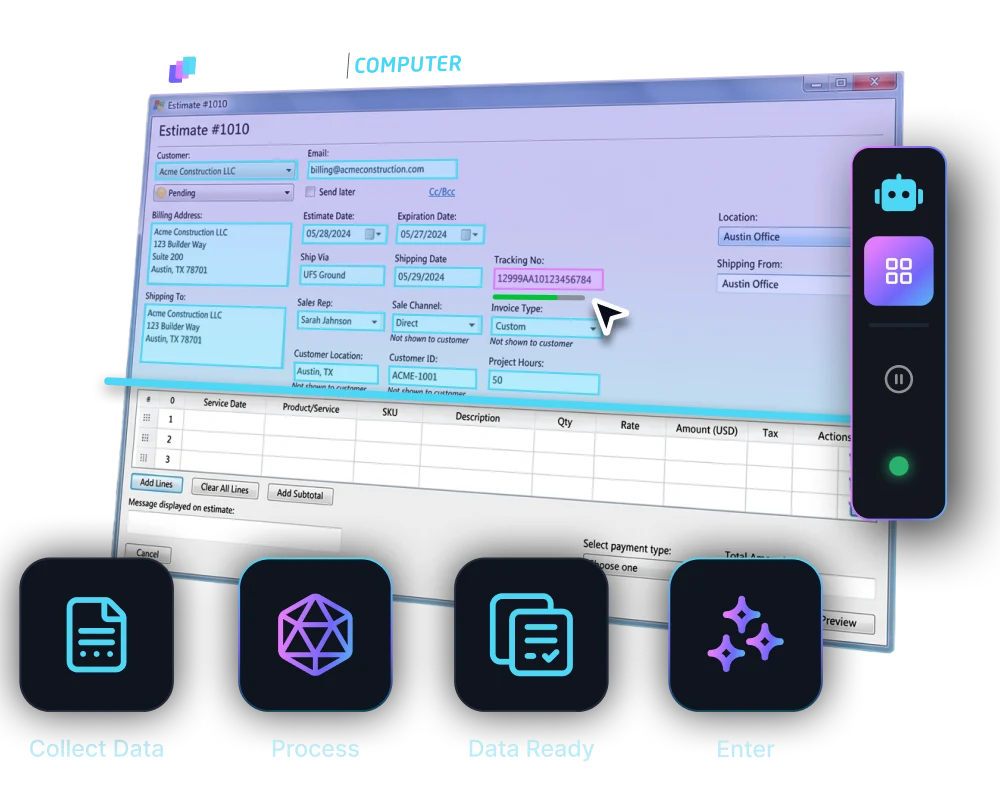
LayerNext replaces this with continuous automation:
This creates what LayerNext calls an “always-closed ledger” meaning the books are never behind, never stale, and never waiting for month-end. For founders, this means cash flow data is always current, not an approximation based on incomplete records.
Cash flow intelligence in LayerNext is built on live data, not delayed reports. Because transactions are continuously processed and reconciled, founders can see:
Instead of reviewing last month’s numbers, founders operate with real-time visibility into cash flow health.
This directly addresses one of the biggest scaling mistakes: making daily decisions with monthly data.
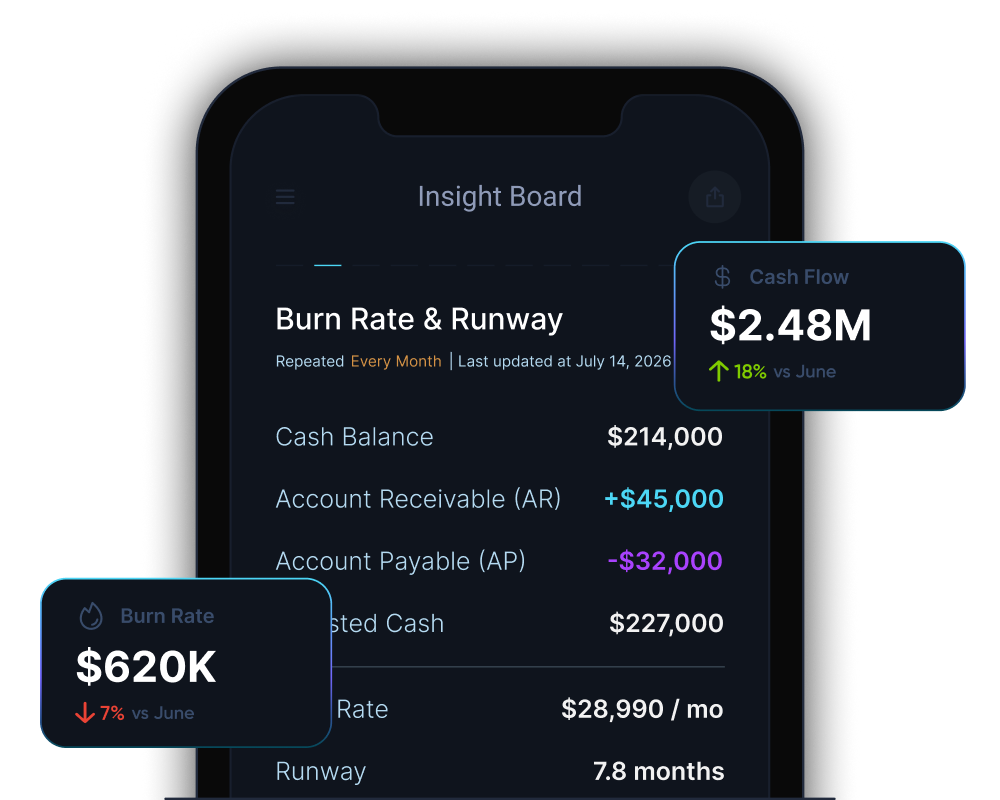
Burn rate and runway are not static metrics they change every time money moves.
LayerNext automatically calculates and updates:
Because these metrics update continuously, founders no longer rely on outdated runway calculations or spreadsheet assumptions.
This turns runway from a guessed estimate into a living metric that reflects the real state of the business.
Traditional cash forecasting relies on manual spreadsheets and assumptions that quickly fall out of date.
LayerNext uses AI to analyze:
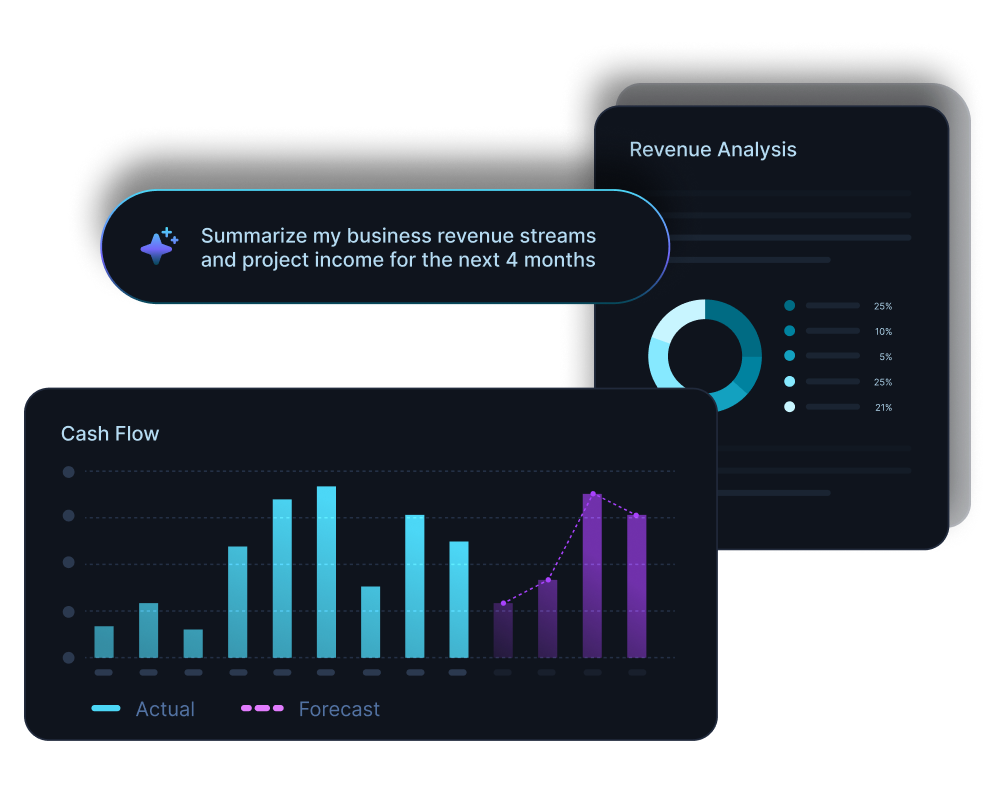
From this, LayerNext produces dynamic cash flow forecasts that evolve automatically as new data arrives.
Instead of asking, “Is this spreadsheet still accurate?”, founders can explore scenarios and anticipate shortfalls using forecasts grounded in real financial behavior.
One of the most powerful aspects of LayerNext’s AI CFO approach is interpretation, not just reporting.
LayerNext doesn’t just show numbers, it:
This shifts cash flow management from reactive to proactive.
Rather than discovering problems after the fact, founders get early signals that allow them to adjust spending, hiring, or strategy in time.
Traditionally, this level of insight required:
LayerNext delivers the same category of insight continuously and automatically.
By combining automated bookkeeping, real-time reconciliation, financial analysis, and AI-driven forecasting, LayerNext acts as a CFO-level intelligence layer for scaling businesses.
This closes the gap between basic bookkeeping and hiring a full-time CFO exactly where many scaling companies struggle the most.
Every cash flow mistake outlined earlier stems from the same root problem:
Financial systems don’t scale at the same pace as the business.
LayerNext solves this by treating financial data as real-time intelligence, not delayed reporting.
With LayerNext:
Cash flow stops being a source of stress and becomes a strategic advantage.