


Close

AP Automation for QuickBooks Desktop

LayerNext AI agents read invoices, validate data, match POs, handle exceptions, and post entries into QuickBooks Desktop. No API or ERP replacement needed.

Built for enterprise AP at scale

LayerNext AI agents read invoices, validate data, match POs, handle exceptions, and post entries into QuickBooks Desktop. No API or ERP replacement needed.

QuickBooks Invoice Capture
Import invoices automatically from the app, email inboxes, shared folders, and local or cloud drives.
Automated PO Matching
Match every invoice to its purchase order, receipts, prices, quantities, and vendor rules.
Statement Reconciliation
AI matches transactions to supplier statements automatically, flagging discrepancies before they compound.
Direct QBO Posting
Post validated invoice data directly into QuickBooks Desktop through its own interface.
Exception Handling
Route only true mismatches, missing POs, and approvals to controllers for review.
Agent That Adapts
Learns supplier formats, past corrections, and business rules automatically over time.

Built for systems with no API

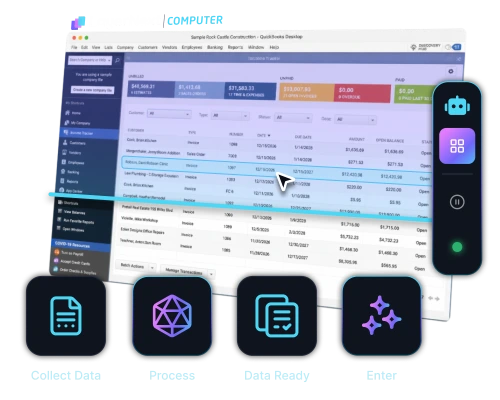
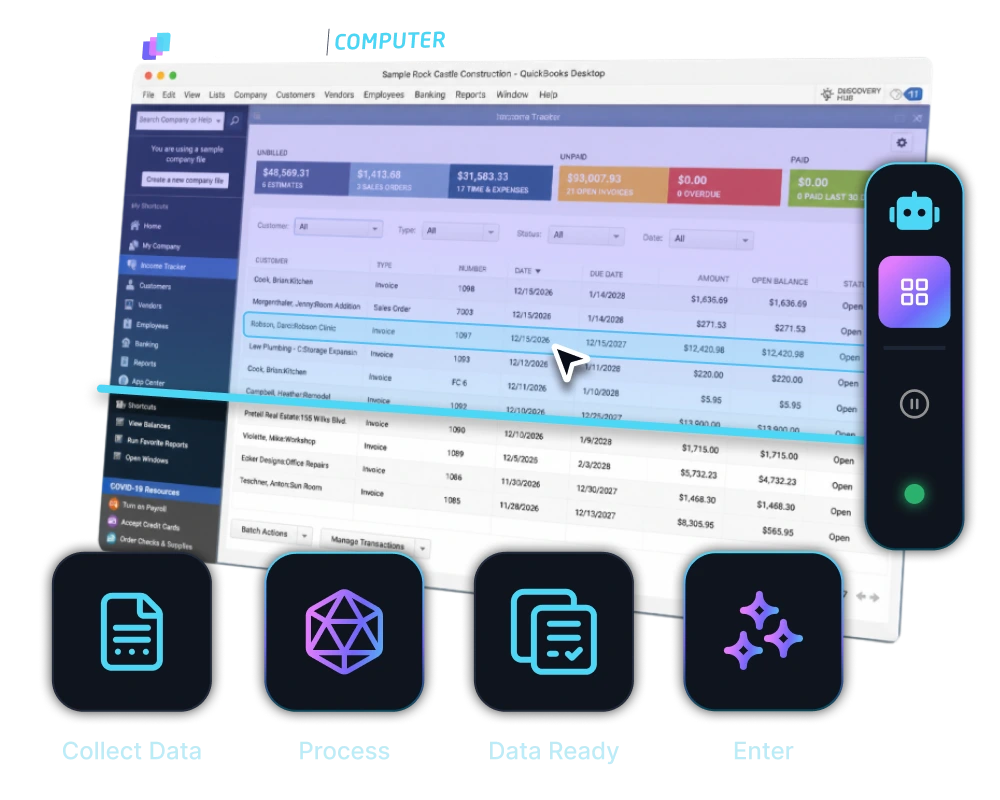
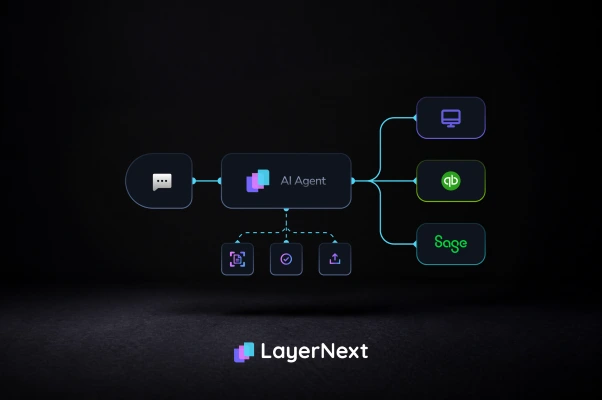
QuickBooks Desktop doesn't offer a usable API to build against. LayerNext Computer doesn't need one. It operates QuickBooks Desktop through its own screens the same way your AP team does, collecting each invoice, processing it, getting the data ready, and entering it, with no API, no middleware, and no integration project.
Learn more

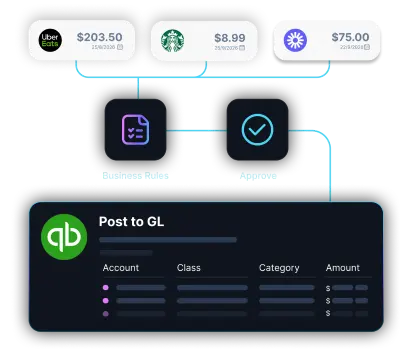
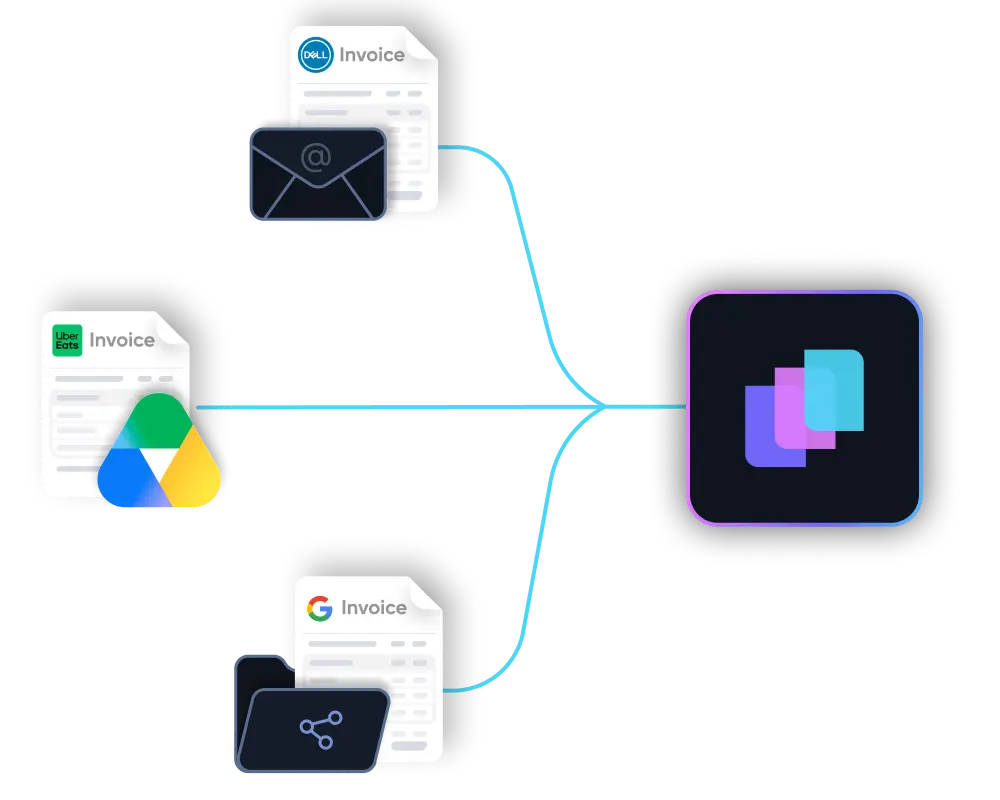
Diagram showing multiple expense entries from apps like Uber Eats, Google, and Starbucks converging into a central software, which then connects to accounting platforms QuickBooks, Xero, and Sage.Diagram showing multiple expense entries from apps like Uber Eats, Google, and Starbucks converging into a central software, which then connects to accounting platforms QuickBooks, Xero, and Sage.

The AP workflow, from intake to posting

From inbox to QuickBooks Desktop, nothing waits on a person. LayerNext reads, checks, and posts every invoice automatically, in real time.
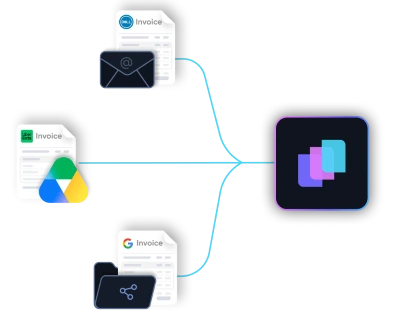
Documents arrive from anywhere

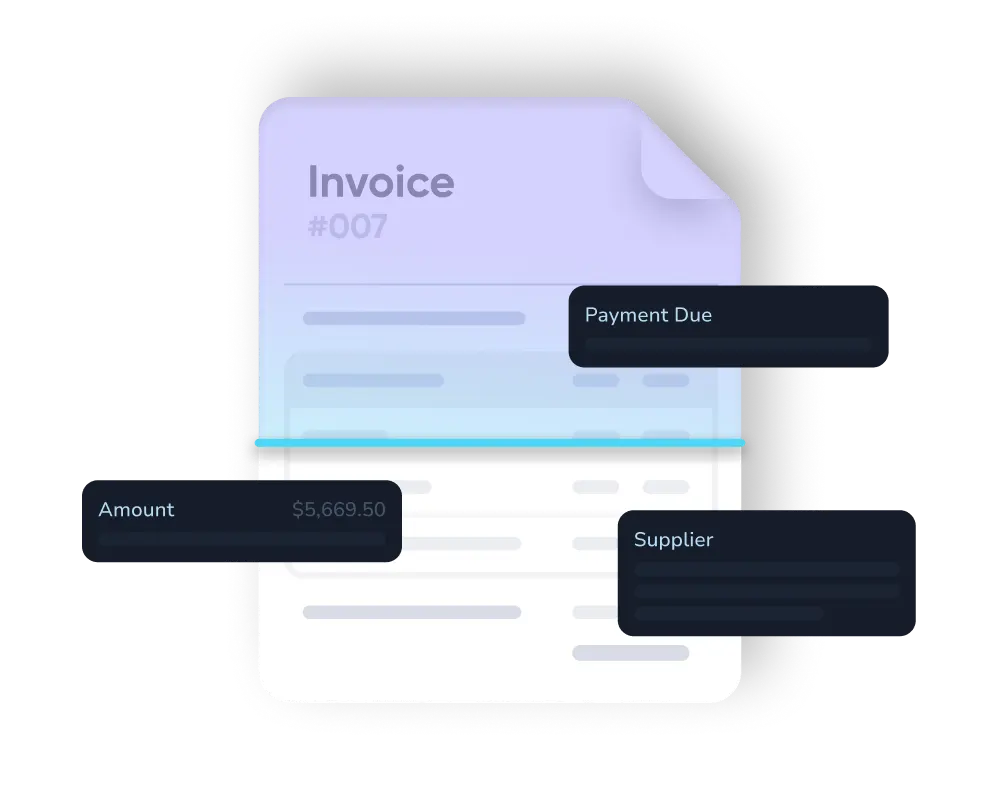
Email inboxes, shared folders, supplier portals, or cloud storage. Invoices are picked up automatically the moment they land, with nothing waiting on a person to start the process.

Unstructured documents understood

PDFs, scans, and inconsistent supplier formats are read and interpreted, including the long tail of messy invoices that OCR and EDI tools typically reject.

Checked against your rules and POs

Pricing, tax treatment, and tolerance thresholds are checked per vendor. Invoices are matched to purchase orders, receipts, and quantities automatically before anything moves forward.

Entered directly into QuickBooks Desktop

QuickBooks Desktop has no usable API, so the agent posts the validated entry by logging into QuickBooks Desktop through its own interface, the same screens an AP clerk uses.

LayerNext pays for itself by month 3

Most customers recover the full contract value before the quarter ends, then keep saving every month after.

5x ROI

Year 1 return on investment

<3 months

Typical payback period on the full contract value

165+

Hours saved per month per finance team

Weeks

To deploy, not months

From manual entry to autonomous

Replace repetitive invoice entry, manual matching, and scattered exception handling with AI agents that complete the AP workflow inside QuickBooks Desktop.

Manual AP

Agent Workflow

Invoice Entry

QuickBooks Desktop

AP clerks key each invoice into QuickBooks Desktop by hand, line by line.

Invoice Entry

LayerNext

Agents read, validate, and post every invoice automatically, no manual keying.

Data Capture

QuickBooks Desktop

Invoice data is copied from PDFs, scans, emails, and paper by hand.

Data Capture

LayerNext

AI extracts data from messy, inconsistent supplier invoices automatically.

PO Matching

QuickBooks Desktop

POs, receipts, prices, and quantities are checked manually against each invoice.

PO Matching

LayerNext

Invoices are matched to POs, receipts, prices, quantities, and vendor rules.

Exception Flow

QuickBooks Desktop

Issues are chased down through emails, spreadsheets, and side conversations.

Exception Flow

LayerNext

Exceptions become tagged tasks with the invoice, supplier, and issue named.

Business Rules

QuickBooks Desktop

Supplier rules live in people's heads or scattered spreadsheets and notes.

Business Rules

LayerNext

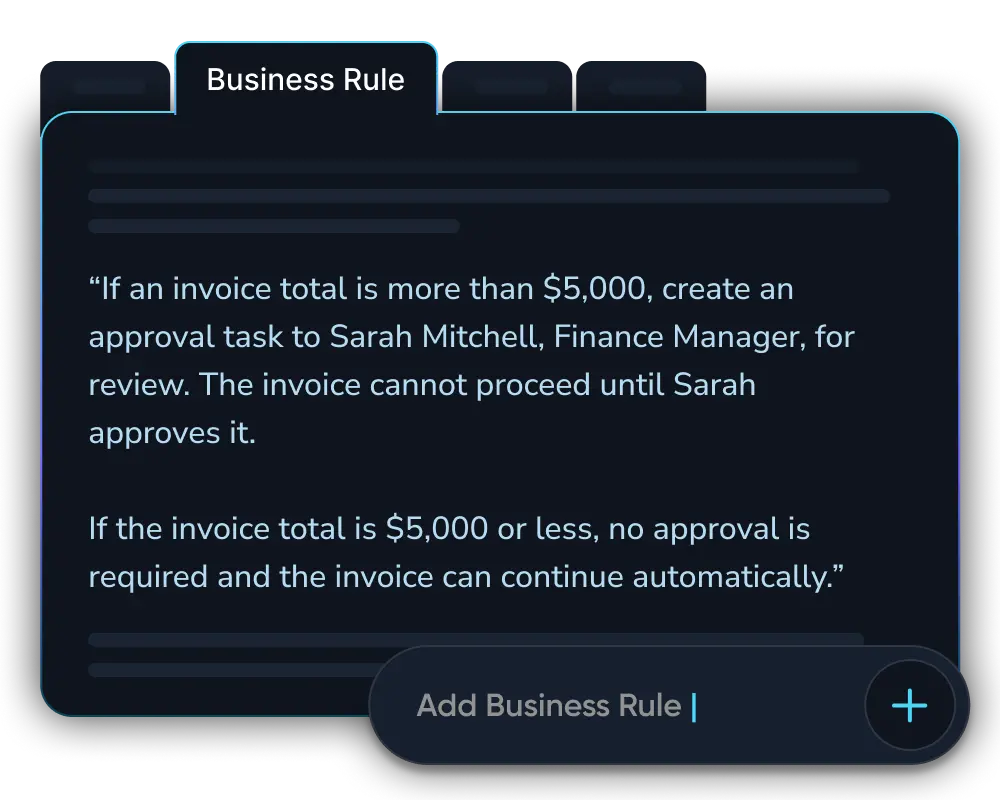
Supplier rules, tolerances, and approvals are applied the same way every time.

ERP Access

QuickBooks Desktop

Automation depends on an API that QuickBooks Desktop simply does not have.

ERP Access

LayerNext

LayerNext operates QuickBooks Desktop through its own interface, the same way a person does.

Team Focus

QuickBooks Desktop

AP teams spend their time on repetitive, manual data entry.

Team Focus

LayerNext

AP teams focus on review, approvals, exceptions, and real judgment calls.

Enterprise-grade security
built into every workflow

See how LayerNext protects your data

Proven across high-volume industries

AP automation excels with high invoice volume, varied supplier formats, and legacy ERPs like QuickBooks Desktop. LayerNext is built for exactly these conditions.

Wholesale Distribution
Manufacturing
Transportation and Logistics
Construction and Trades
Real Estate and Property
Healthcare and Senior Care
Agriculture and Agribusiness
Automotive
Energy and Utilities
Hospitality and Food Service
Public Sector

Resources for AP teams

Real-world guides on accounts payable automation, ERP integration, and finance operations.
Common questions

What is QuickBooks Desktop AP automation?
QuickBooks Desktop AP automation uses software or AI agents to process supplier invoices, validate the data, match invoices to purchase orders, route exceptions, and post approved entries into QuickBooks Desktop. LayerNext goes beyond invoice capture by completing the entire AP workflow inside QuickBooks Desktop itself.
Does LayerNext require a QuickBooks Desktop API?
No. QuickBooks Desktop has no native API for this kind of automation, only a local qbXML and Web Connector setup that is not built for continuous AP workflows. LayerNext instead operates QuickBooks Desktop through its own interface, the same screens an AP clerk uses, so no API access is needed.
Does LayerNext work with QuickBooks Desktop Pro, Premier, and Enterprise?
Yes. LayerNext is built for enterprise AP teams using any QuickBooks Desktop edition, including Pro, Premier, and Enterprise. Since Intuit stopped selling new Pro and Premier subscriptions in 2024, Enterprise is now the primary edition for new deployments, but LayerNext supports existing Pro and Premier installations the same way.
Can LayerNext post invoices into QuickBooks Desktop?
Yes. After LayerNext reads an invoice, checks it against your rules, and matches it to a purchase order, the agent posts the approved entry directly into QuickBooks Desktop using computer-use automation, logging in and entering data through the same interface an AP clerk would use.
How does LayerNext handle PO matching for QuickBooks Desktop?
LayerNext checks each invoice against its purchase order, comparing prices, quantities, receipts, freight, taxes, and vendor-specific tolerance thresholds. If everything lines up, the invoice posts to QuickBooks Desktop automatically. If something does not match, a price gap or a missing PO, LayerNext creates a tagged task for a person to review.
How long does implementation take?
LayerNext is configured around your actual invoices, supplier rules, and QuickBooks Desktop workflow. Enterprise deployments are typically completed in weeks, not months, depending on invoice volume and how many suppliers and approval chains need to be set up. Human input is requested only when a decision is genuinely needed.

Still keying invoices into QuickBooks Desktop?

Turn manual QuickBooks Desktop entry into an autonomous workflow, from invoice capture through PO matching, posting, and reconciliation, all the way to CFO-level reporting on where your business stands.

Start for free